Research Sourcing
The $89 Vial And The $179 Vial Hold The Same Material. One Costs 34% Less Per Milligram.
Nobody in this category compares price per milligram. They compare price per vial, which is the one number that tells you nothing. Here is the arithmetic on a real catalogue, and what it costs to get it wrong.
 See this in the catalogue →
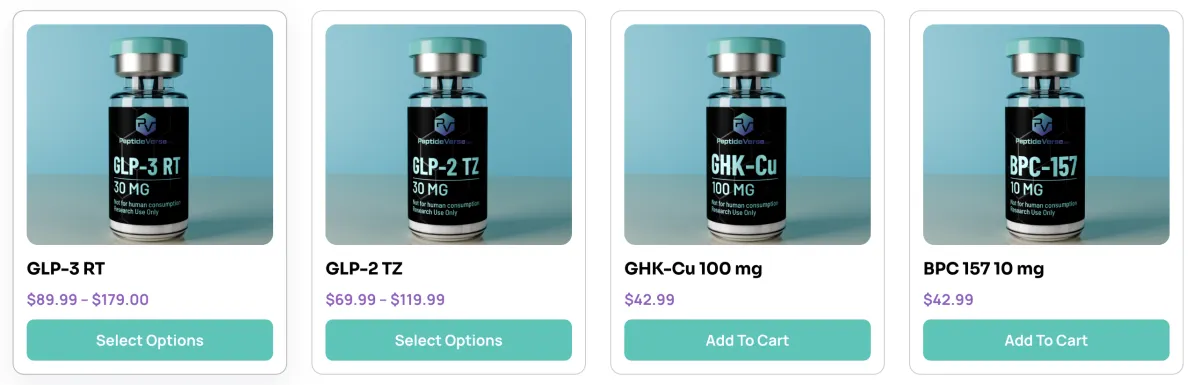
Open any catalogue in this space. You will see a vial at $89.99 and a vial at $179.00. Your brain does the obvious thing. The cheap one is cheap.
It is not.
A vial is a container. A milligram is the thing you are buying. The price on the listing is attached to the container. The value is attached to the contents. Those two numbers move independently, and on most catalogues they move a long way apart.
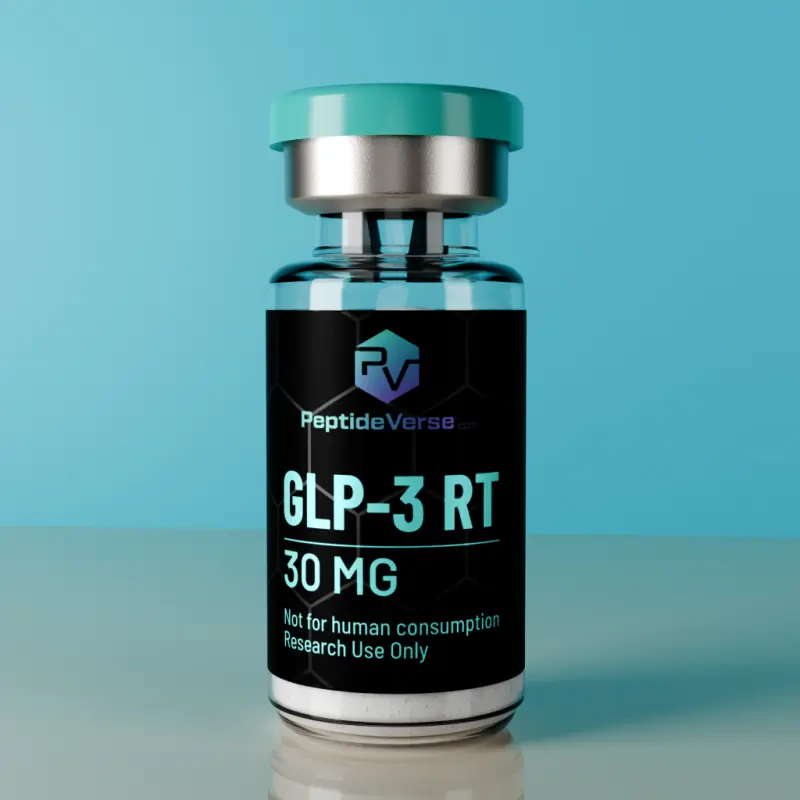
Here is one item from the range in the photograph above, priced live today, run through a calculator.
Figures are the live listed prices divided by the labelled milligrams. Open the catalogue and check them yourself.
Read the size before you read the price.
Every size and the third-party certificate for the lot, both on the listing.
Browse the lab-tested range →1Three small vials cost $90.97 more than one large one
Same catalogue. Same material. Same week.
Three 10 mg vials at $89.99 comes to $269.97 for 30 milligrams. One 30 mg vial is $179.00 for the same 30 milligrams.
The gap is $90.97. That is not a discount you missed. That is half the price of the large vial, paid for nothing, because the comparison was made on the wrong number.
Price per vial is a container cost. Price per milligram is what you actually pay.
2The same pattern shows up on the next item along
This is not a quirk of one listing. A second item in the same catalogue sits at 15 mg for $69.99 and 30 mg for $119.99.
That is $4.67 per mg against $4.00 per mg. Two 15 mg vials cost $139.98. One 30 mg vial holding the same 30 milligrams costs $119.99.
A $19.99 gap. Smaller than the first one, and still real money for doing the sum in the wrong order.
Size tiers are priced per container. The per milligram cost falls as the container grows, on almost every item.
 Open the full catalogue →
3Two catalogues can list the same price and not be the same price
Here is where it gets expensive.
Supplier A lists an item at $69.99. Supplier B lists the equivalent item at $69.99. Identical listing price. Identical product name.
Supplier A's vial holds 15 mg. Supplier B's holds 10 mg. Supplier A is $4.67 per mg. Supplier B is $7.00 per mg. Supplier B is 50% more expensive and the listing page gives you no signal at all.
If the milligrams are not in the product name, you cannot compare two suppliers. Most catalogues in this space do not put them there.
4The number that is missing entirely
Price per milligram assumes the vial holds the milligrams on the label. That is a second assumption, and it is a bigger one.
Purity and net content are two separate laboratory tests. Purity asks what fraction of the material is the right molecule. Net content asks how many milligrams are actually in the vial. A vial can pass the first and fail the second, and most certificates only print the first.
Which means the cheapest price per milligram on a page is worthless if nobody measured the milligrams.
Price per mg is only real if the mg is verified. Find the certificate for your lot number, or the arithmetic is theatre.
15 certificates. 48 pages. Search by lot number.
Third-party analysis for every lot they ship, published before you order, with the lot number printed on it.
Open the COA library →5The sixty second version
Before you add anything to a cart in this space, run these four. It takes under a minute and it is the fastest way to separate two suppliers.
- Find the milligrams. If the listing does not print them, you have no basis for comparison. Leave.
- Divide. Listed price divided by labelled milligrams. That is your real unit cost.
- Compare the sizes inside one listing. If three small vials cost more than one large one, buy the large one.
- Open the certificate for that lot. If net content is not on it, the milligrams in your sum are a claim, not a measurement.
| Comparing two suppliers | What it tells you | What it hides |
|---|---|---|
| Price per vial | The cost of the container | Everything that matters |
| Price per milligram | Your real unit cost | Whether the mg is verified |
| Net content on the COA | The mg was measured | Nothing. This is the floor. |
| Lot number on the certificate | The test matches your vial | Nothing |
| Product level PDF, no lot | A document exists | Which batch it describes |
Do the division. Then order.
Every listing prints its milligrams. Every lot has a third-party certificate you can open before you buy.
Browse the lab-tested range →
Comments
Ran this on my last four orders and I have been buying the small vial every single time because it looked cheaper on the page. Worked out to about $240 wasted over the year.
Same, and the annoying part is the maths takes ten seconds. There is no excuse for not doing it.
The two suppliers at the same listing price with different vial sizes is exactly what caught me out last year. Neither listing put the mg in the title.
Good point on net content. Price per mg is only as good as the mg claim. Checked three suppliers and only one had content on the certificate.
Which one? I have been trying to work out who actually publishes it rather than sending it on request.
Bookmarking the four step version. The bit about leaving if the mg is not printed is the one most people will skip.